

 Trusted Ally Staff
Clinton Engineer Works: Approved for EEOICPA benefits
 Trusted Ally Staff : Oct 2, 2026, 10:31:27 AM
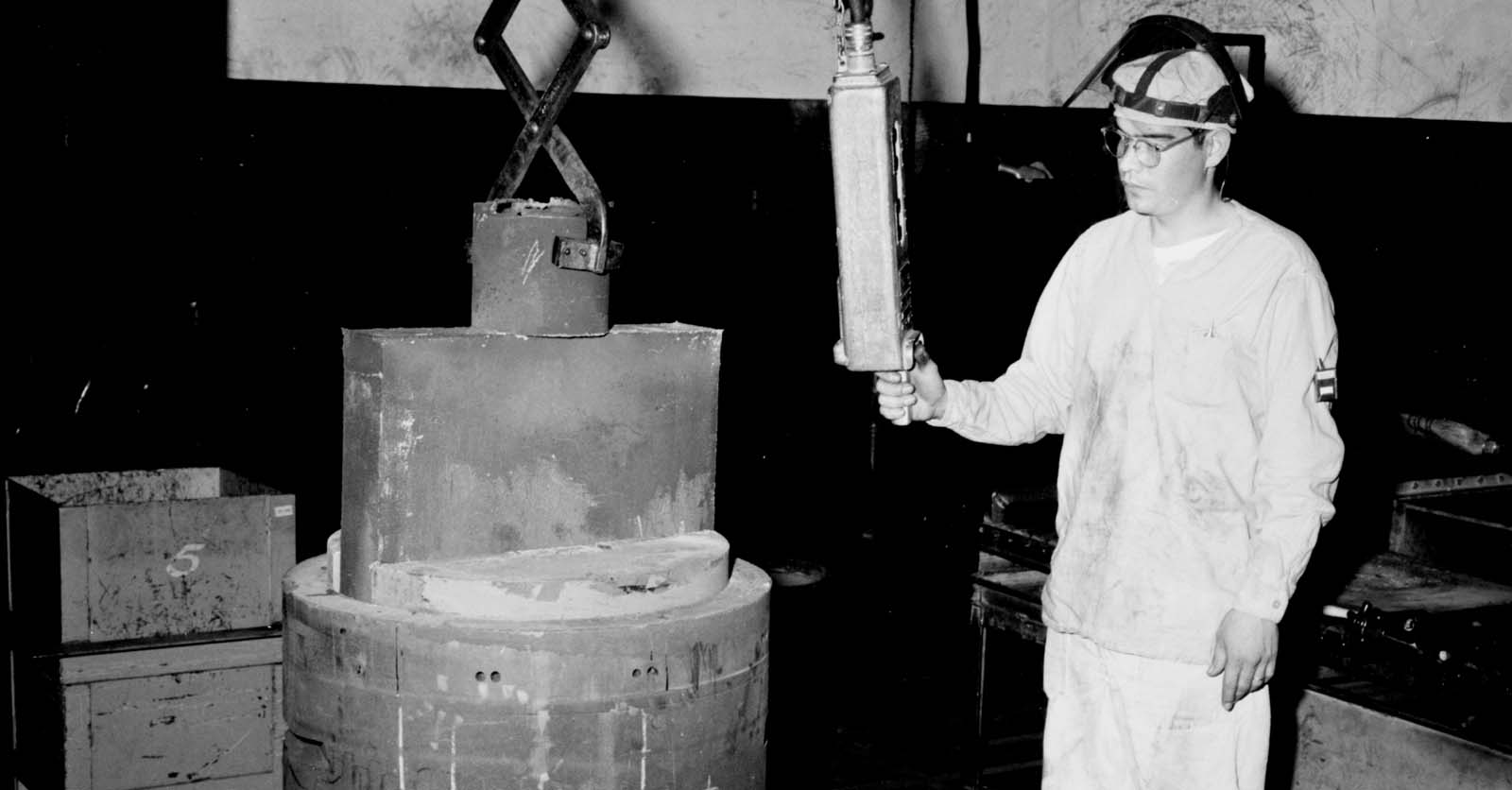
Image: View of depleted uranium ingot and mold in foundry.
When people think of Oak Ridge, Tennessee, they usually think of the Manhattan Project and picture the massive government plants built during World War II. But not all nuclear-connected work happened inside famous federal facilities. Some of it took place in smaller, lesser-known sites like Manufacturing Sciences Corporation (MSC), a private company that worked with depleted uranium and specialty metals for national defense and nuclear-related programs.
MSC didn’t design bombs or enrich uranium. Its role was more behind the scenes. The company cast, rolled, and machined depleted uranium (DU), a byproduct of uranium enrichment, into components used for radiation shielding, testing, and defense applications. While DU is less radioactive than weapons-grade material, working with it still involves real risk, as it was a material that few facilities in the country were equipped to safely handle. For many workers, these risks weren’t fully explained at the time.
MSC is one of the only U.S. facilities capable of rolling depleted uranium into usable forms. Many workers didn’t realize how rare and highly specialized their skills were until years later. In a strange way, MSC turned nuclear “waste” into functional materials, work that quietly supported national security while carrying very real personal costs for the people doing it.
Early-1980s: MSC was founded in the early 1980s at the Rocky Flats Plant in Colorado and then relocated to Oak Ridge, Tennessee. This location was chosen because Oak Ridge already had the infrastructure and federal presence needed for specialized nuclear-related manufacturing. This period focused on building technical expertise, safety systems (by the standards of that time), and federal relationships that would later define MSC’s role in defense manufacturing.
Mid-1980s: MSC begins operating in Oak Ridge. Since Oak Ridge was a hub for nuclear and advanced materials work, it meant that MSC could tap into an experienced workforce and federal oversight ecosystem. The production of DU components ramped up, including rolling and forming dense metal parts used for shielding and testing in nuclear and defense programs.
1990s-2000s: As the Cold War wound down, national defense priorities shifted. MSC adapted to these changes by expanding toll-rolling and specialty metals manufacturing for research, testing and non-weapons applications. Also during this decade, occupational safety and environmental standards began tightening across the nuclear industry. Monitoring, respirators, contamination controls, and waste handling procedures improved in comparison to earlier years.
2000s: By the 2000s, federal oversight of DU handling and beryllium exposure was far stricter. MSC’s operations increasingly reflected modern radiation protection standards, including environmental monitoring, exposure tracking, and formal safety training. This is also when former workers began filing claims related to occupational illness under federal compensation programs.
2010s-Present: MSC continues specialty manufacturing today, but with far more advanced safety systems than existed during its beginning years. At the same time, the legacy of past exposure lives on through former workers dealing with work-related illnesses. Recognition of MSC under federal worker compensation programs reflects a growing acknowledgment that “vendor” facilities also carried real nuclear risk.
Although MSC was not created by the Atomic Energy Commission (AEC), its work supported federal nuclear missions that later fell under agencies like the U.S. Department of Energy (DOE). In that sense, the company functioned as part of the larger nuclear supply chain that powered America’s Cold War and post-Cold War defense efforts.
Health impacts among workers are a serious part of this story. In addition to depleted uranium, employees may have been exposed to beryllium, industrial solvents, and heavy metal fumes common in advanced manufacturing environments. Fine uranium dust can be inhaled and metal fumes can irritate lungs leading to kidney and respiratory diseases, and long-term exposure has been linked to certain cancers. Many of these illnesses take years (even decades) to appear, which is why so many former nuclear workers only later realized their health issues might be connected to their jobs.
Exposure risks began in the early 1980s for those early-years workers, many of whom were pioneers in handling DU at an industrial scale with far fewer protections than those that exist today. In the mid-80s, workers exposure risk increased due to higher production volume. Fine metal dust, uranium oxides, and industrial chemicals were more frequently present in the work environment. The early 2000s era laid the groundwork for recognizing long-term health impacts and connecting past exposure to present-day illness. The 2010s represented more accountability catching up to history, though there is still a long way to go to bridge the gap between exposure and recognition.
MSC sits within the broader Oak Ridge region, an area that has lived with the environmental consequences of nuclear work for generations. While MSC is more modern and regulated than Manhattan Project–era sites, any facility handling radioactive materials presents understandable concerns about air quality, soil safety, and groundwater protection. DU machining and metalworking released fine particle dust that raised air quality concerns, and Oak Ridge has documented soil and groundwater contamination from older federal sites.
While Manufacturing Sciences Corporation is a private facility, it operates within the larger Oak Ridge nuclear corridor. That history matters, because environmental impacts in Oak Ridge are cumulative. Even newer facilities exist within a landscape already burdened by legacy contamination.
Oak Ridge communities have long balanced the economic benefits of nuclear-related jobs with the long-term environmental and health risks tied to that work. Many families have multiple generations who worked in nuclear-related facilities, including smaller contractors like MSC. Facilities like MSC provided good-paying, highly specialized jobs. That economic stability mattered to families, but it also meant people were exposed to radiation and chemical illnesses. For many families, illness brought financial strain, unanswered questions and frustration about the lack of early warnings. Those health concerns often surfaced years later, long after people had retired.
Unlike some of Oak Ridge’s larger federal plants, MSC has not required Superfund-scale remediation or large-scale demolition. However, it operates under strict radiation controls, environmental regulations, and continuous monitoring. While MSC itself has avoided the most severe contamination seen at older Manhattan Project–era facilities, it exists within a region still shaped by the long-term environmental impacts of nuclear work.
Government response has focused on ongoing regulation, monitoring, and regional cleanup rather than one-time remediation of MSC. This includes federal and state oversight of radiation safety, hazardous materials such as beryllium, and workplace exposure, with increasingly strict standards for ventilation, protective equipment, contamination controls, and medical surveillance. At the regional level, long-term cleanup managed by the U.S. Department of Energy at the Oak Ridge Reservation addresses contaminated soil, groundwater, and legacy waste, with measures like capped waste sites, groundwater treatment, and demolition of unsafe structures helping reduce environmental risk for surrounding communities.
While cleanup focuses on land and water, compensation programs focus on people and recognizing that health impacts can’t be undone, but medical care can still be supported. Federal recognition of contractor and vendor worker exposures through EEOICPA represents a major shift in government response. It acknowledges that nuclear-related harm didn’t only happen inside well-known government facilities, it also occurred in smaller private plants, like the Manufacturing Sciences Corporation, that supported the nuclear supply chain.
The Manufacturing Sciences Corporation is an approved facility for The Energy Employees Occupational Illness Compensation Program or the EEOICPA White Card Program.
As of October 2026, Manufacturing Sciences Corporation workers have received close to $35,000 in EEOICPA compensation and medical bills paid.

Let us check if you or a loved one qualifies for up to $400,000 plus free medical care in the comfort of home.
Your pathway to care starts with Trusted Ally Home Care. Get started today and let us guide you through the process of receiving the care you or a loved one deserves.
A: Manufacturing Sciences Corporation (MSC) processed depleted uranium and specialty metals for nuclear-related and national defense applications. Its workers cast, rolled, and machined depleted uranium into components used for radiation shielding, testing, and other specialized purposes.
A: Yes. Manufacturing Sciences Corporation in Oak Ridge, Tennessee, is listed as a covered beryllium vendor under the Energy Employees Occupational Illness Compensation Program Act (EEOICPA). Individual eligibility depends on qualifying employment and medical evidence. Working at a covered facility does not automatically qualify someone for benefits.
A: MSC’s beryllium vendor designation is particularly relevant to claims involving chronic beryllium disease and beryllium sensitivity. Eligible workers may qualify for compensation, medical treatment, or medical monitoring, depending on the diagnosis. Exposure to depleted uranium or other substances does not, by itself, establish eligibility.
A: Yes. Retirement does not automatically prevent former Manufacturing Sciences Corporation workers from qualifying for EEOICPA benefits. Workers must still meet the program’s employment and medical requirements, even when a qualifying illness is diagnosed years after their employment ended.
A: Trusted Ally helps former Manufacturing Sciences Corporation workers understand the EEOICPA program and navigate next steps, including questions about eligibility, employment records, and medical documentation. For workers with approved benefits, Trusted Ally can also help explain options for home healthcare related to accepted conditions. The U.S. Department of Labor determines eligibility and approves benefits.
A: Former Manufacturing Sciences Corporation workers and their families can call Trusted Ally at (866) 286-6426 for guidance on the EEOICPA program, questions about next steps, and information about home healthcare services for approved conditions.
Trusted Ally Staff : Mar 17, 2025, 2:49:54 PM

Trusted Ally Staff : Jan 8, 2026, 4:30:47 PM
Trusted Ally Staff : Mar 28, 2025, 10:27:59 AM
Trusted Ally Staff : Mar 21, 2025, 3:40:18 PM
Trusted Ally Staff : Jan 8, 2026, 10:48:04 AM
Trusted Ally Staff : Mar 7, 2025, 3:01:39 PM
Trusted Ally Staff : Apr 11, 2025, 10:37:34 AM